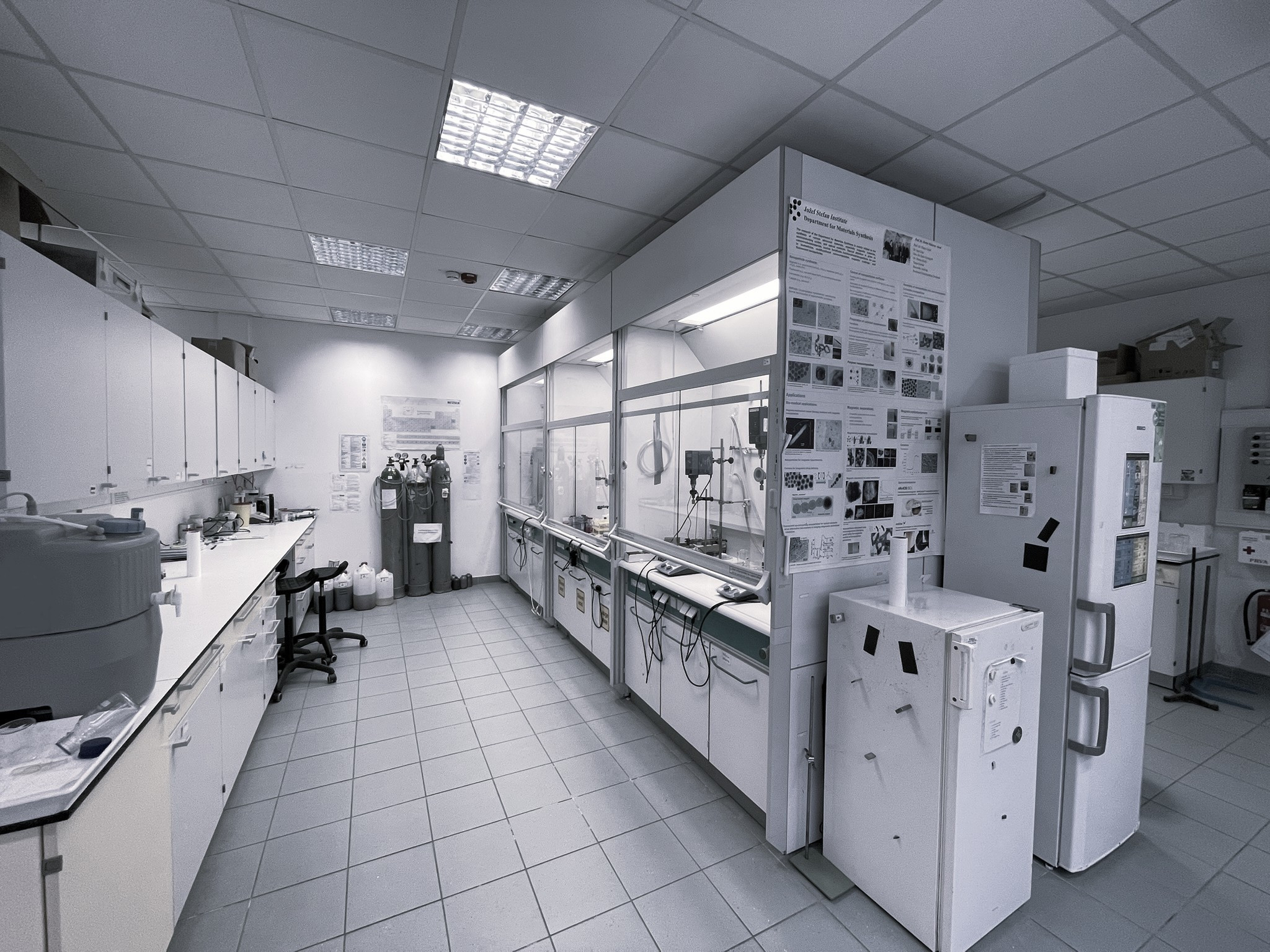
Our materials synthesis laboratory provides a versatile wet-chemistry environment for the preparation and processing of multifunctional inorganic and hybrid nanomaterials. Equipped with six fume hoods and extensive synthesis infrastructure, the laboratory supports a broad range of chemical procedures, from exploratory small-scale experiments to reproducible preparation of functional materials.
The laboratory is equipped for nanoparticle synthesis, surface functionalization, colloidal processing, catalyst preparation, and solid-state material processing. Infrastructure includes precision-controlled heating mantles and reactor systems for wet-chemical synthesis under controlled temperature and atmosphere, together with stainless-steel and high-nickel alloy autoclaves designed for hydrothermal synthesis and chemically demanding alkaline conditions. Standard laboratory equipment for purification, separation, thermal treatment, and materials handling supports flexible experimental workflows across multiple research areas.
Every catalyst, nanoparticle, and hybrid material starts here — providing the experimental foundation for our research in magnetic materials, catalysis, hybrid nanostructures, liquid ferroics, and magnetically responsive systems.
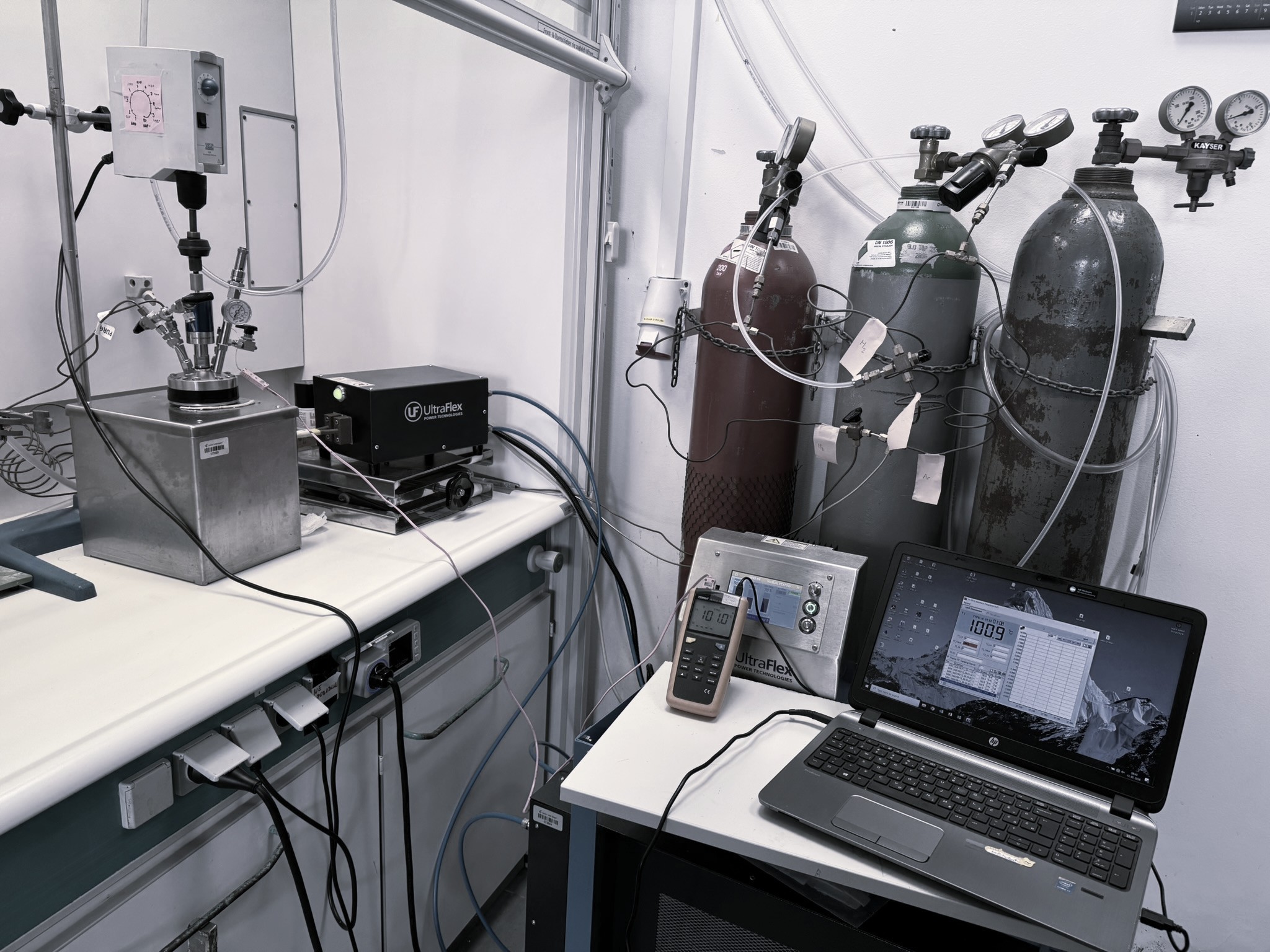
The laboratory operates a custom-built slurry-phase magnetic catalysis reactor designed for batch experiments in liquid media under alternating magnetic fields. The system consists of a quartz reaction vessel equipped with interchangeable PTFE stirring geometries, including Rushton and pitch-blade impellers, enabling controlled hydrodynamic conditions during catalytic experiments. The reactor includes gas inlet and outlet connections, sampling ports, and purging capabilities for operation under controlled atmospheres. Magnetic heating is provided by an UltraFlex 2 kW induction system capable of generating alternating magnetic fields up to 30 mT in the frequency range between 80 and 300 kHz.
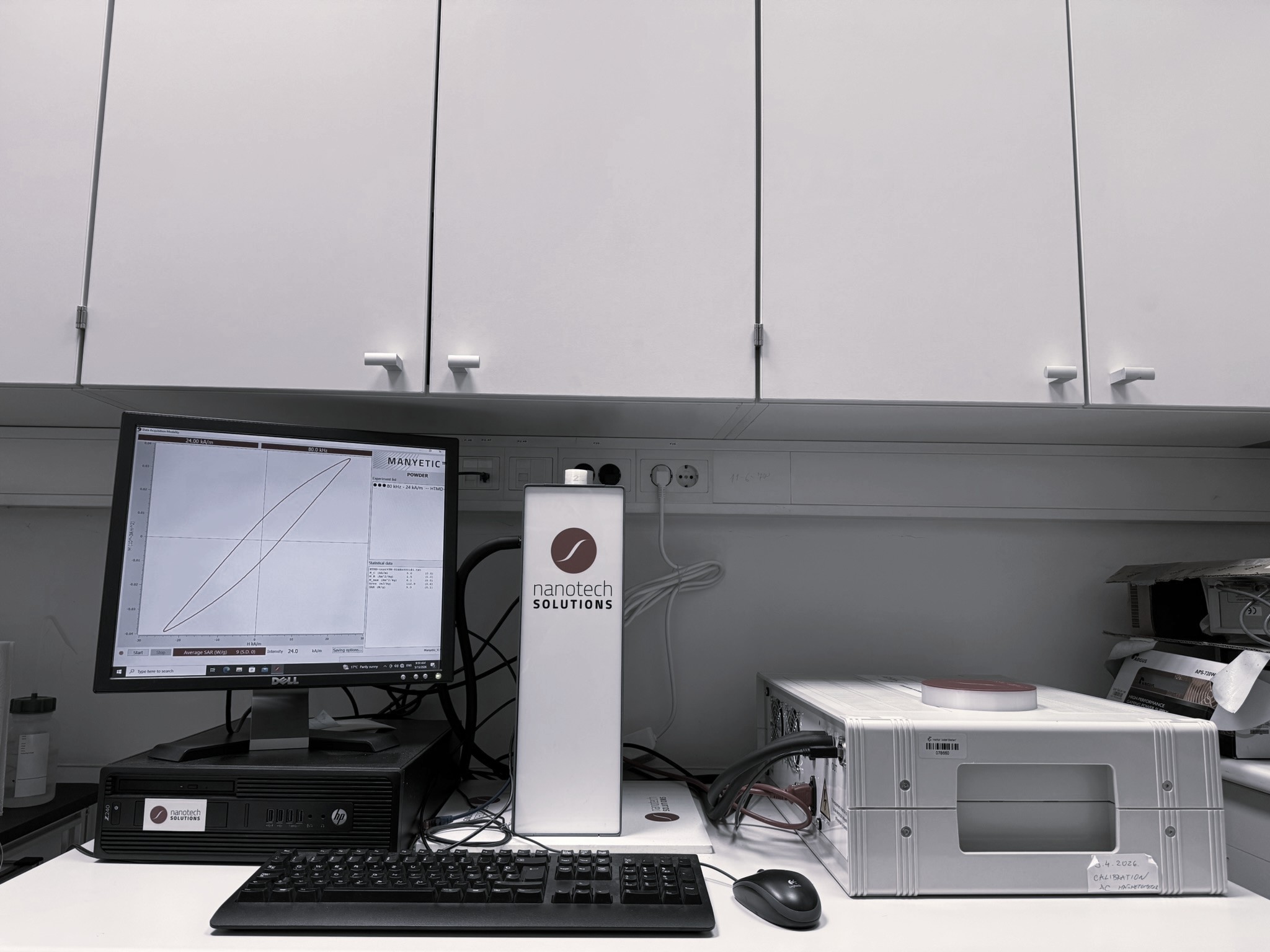
The laboratory operates an Advanced AC Hysteresis Magnetometer for the characterization of magnetic materials under high-frequency alternating magnetic fields. The system enables measurements of dynamic hysteresis loops, magnetic losses, and heating efficiency relevant for magnetic hyperthermia, inductive heating, and magnetic catalysis applications. The instrument operates over a broad range of magnetic field amplitudes (up to 30 mT) and frequencies (80 kHz to 350 kHz), allowing investigation of field-dependent magnetic behaviour under conditions relevant to practical operation of magnetic materials and devices. The setup supports studies of nanoparticles, ferrofluids, powders, and structured magnetic materials.
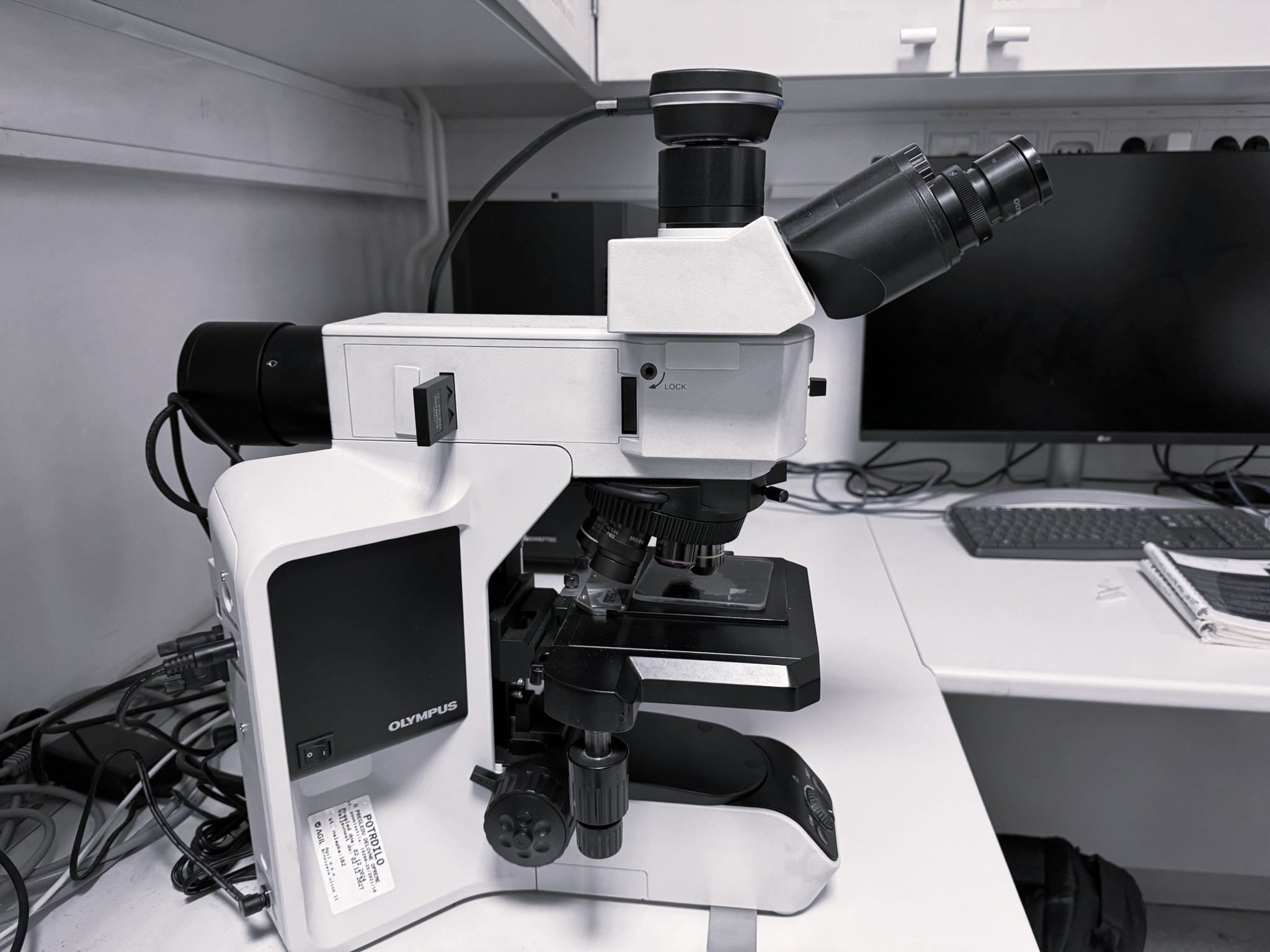
The Olympus optical microscope is used for visual inspection and basic morphological evaluation of prepared materials, powders, suspensions, and sample surfaces. It enables quick assessment of sample homogeneity, particle agglomeration, crystal formation, surface features, and other visible structural characteristics.
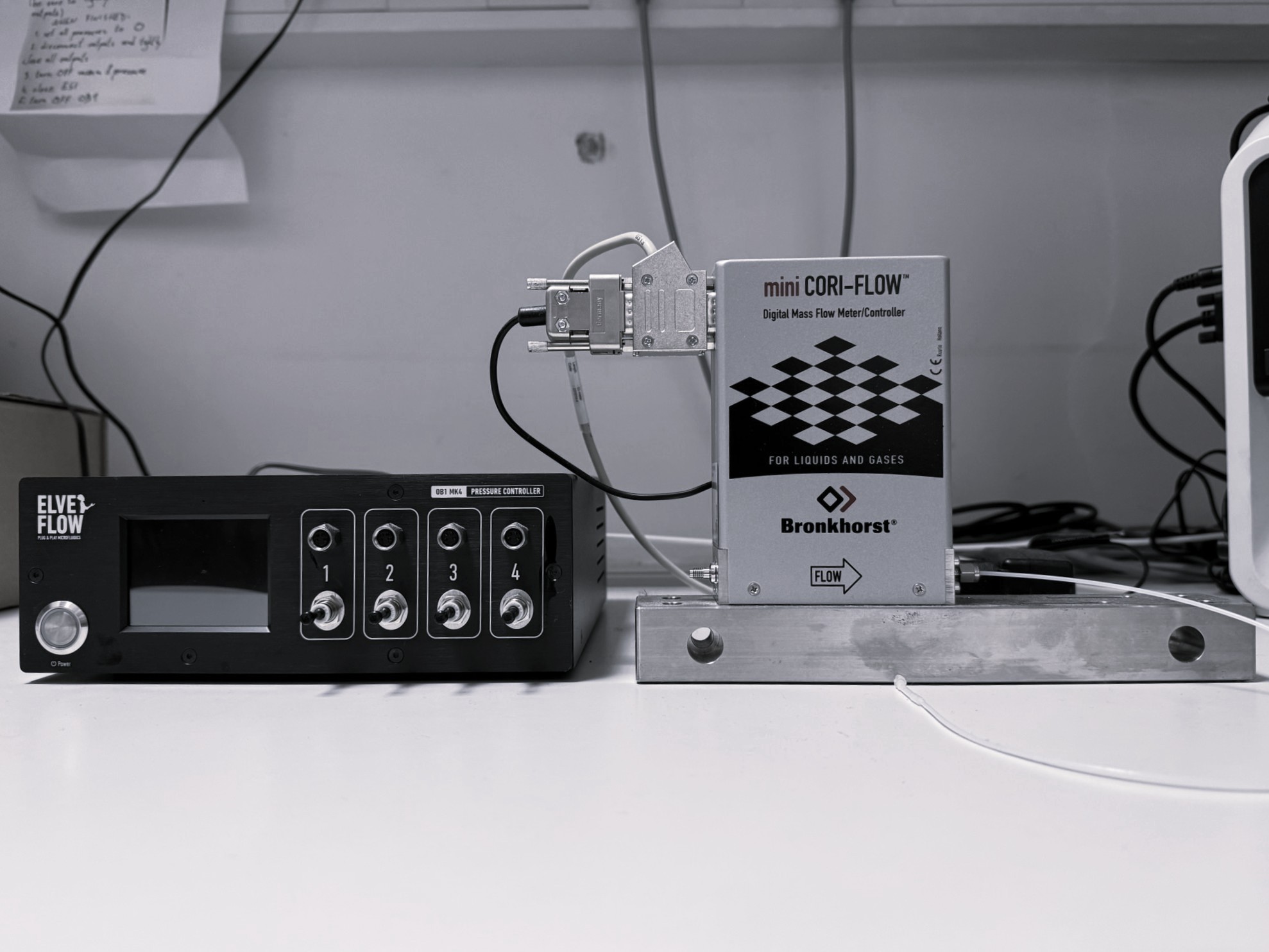
The Bronkhorst mini CORI-FLOW mass flow meter/controller is used for precise measurement and control of low liquid or gas flow rates. Based on the Coriolis principle, it provides direct mass-flow measurements that are largely independent of fluid properties such as density, viscosity, temperature, or pressure.
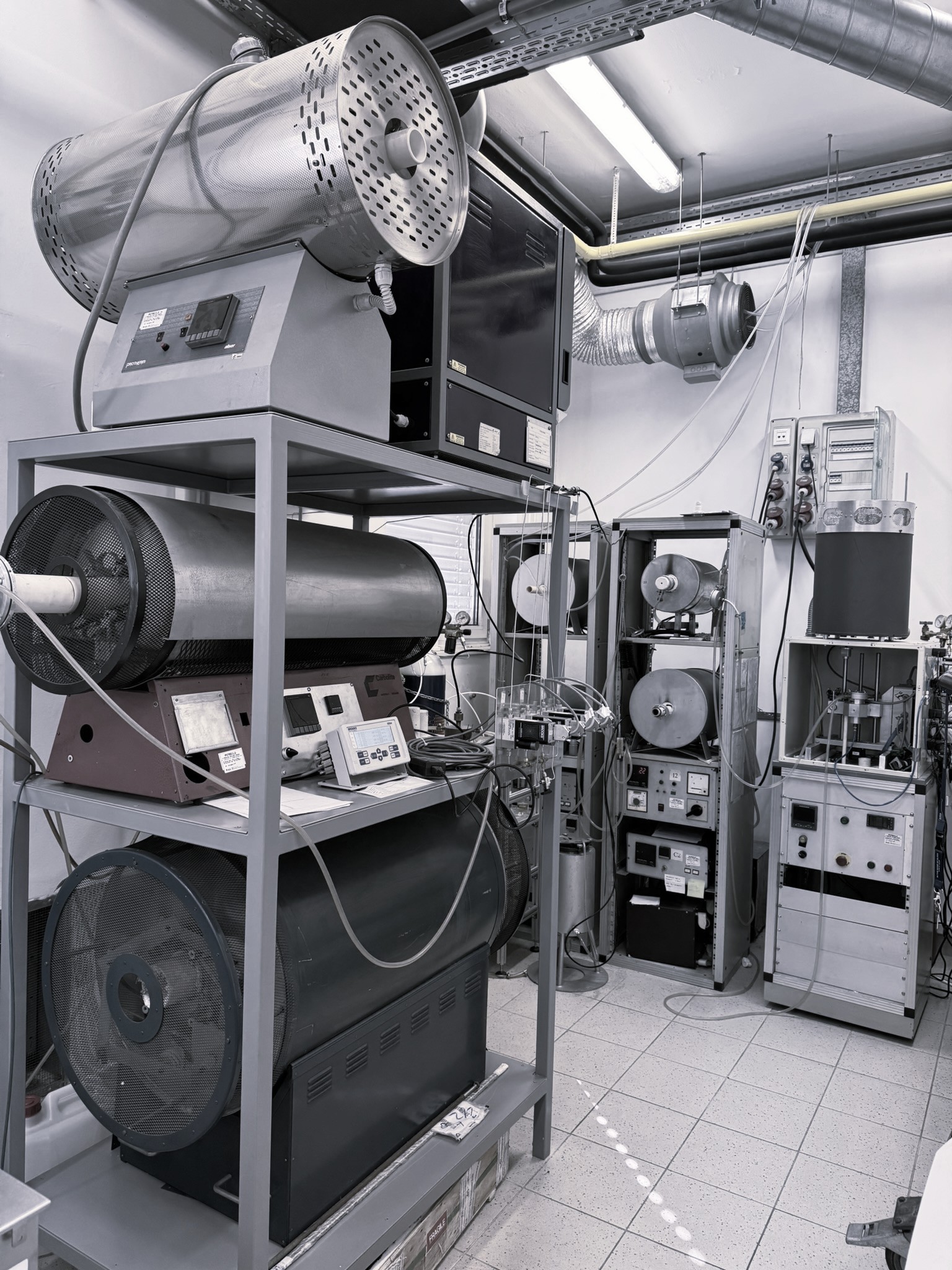
The laboratory includes a dedicated furnace and thermal processing facility equipped with multiple chamber, tubular, and vertical tubular furnaces for controlled thermal treatment and synthesis of materials. The systems support a broad range of processes including calcination, annealing, reduction, oxidation, solid-state synthesis, and thermal activation of powders, catalysts, and nanostructured materials. Several furnaces are equipped with controlled-atmosphere operation using mass flow controllers, enabling precise regulation of reactive and inert gas environments during thermal processing. The facility supports temperatures up to 1400 °C and allows flexible processing under air, inert, reducing, or mixed-gas atmospheres, providing essential infrastructure for the preparation and modification of multifunctional inorganic and hybrid materials.
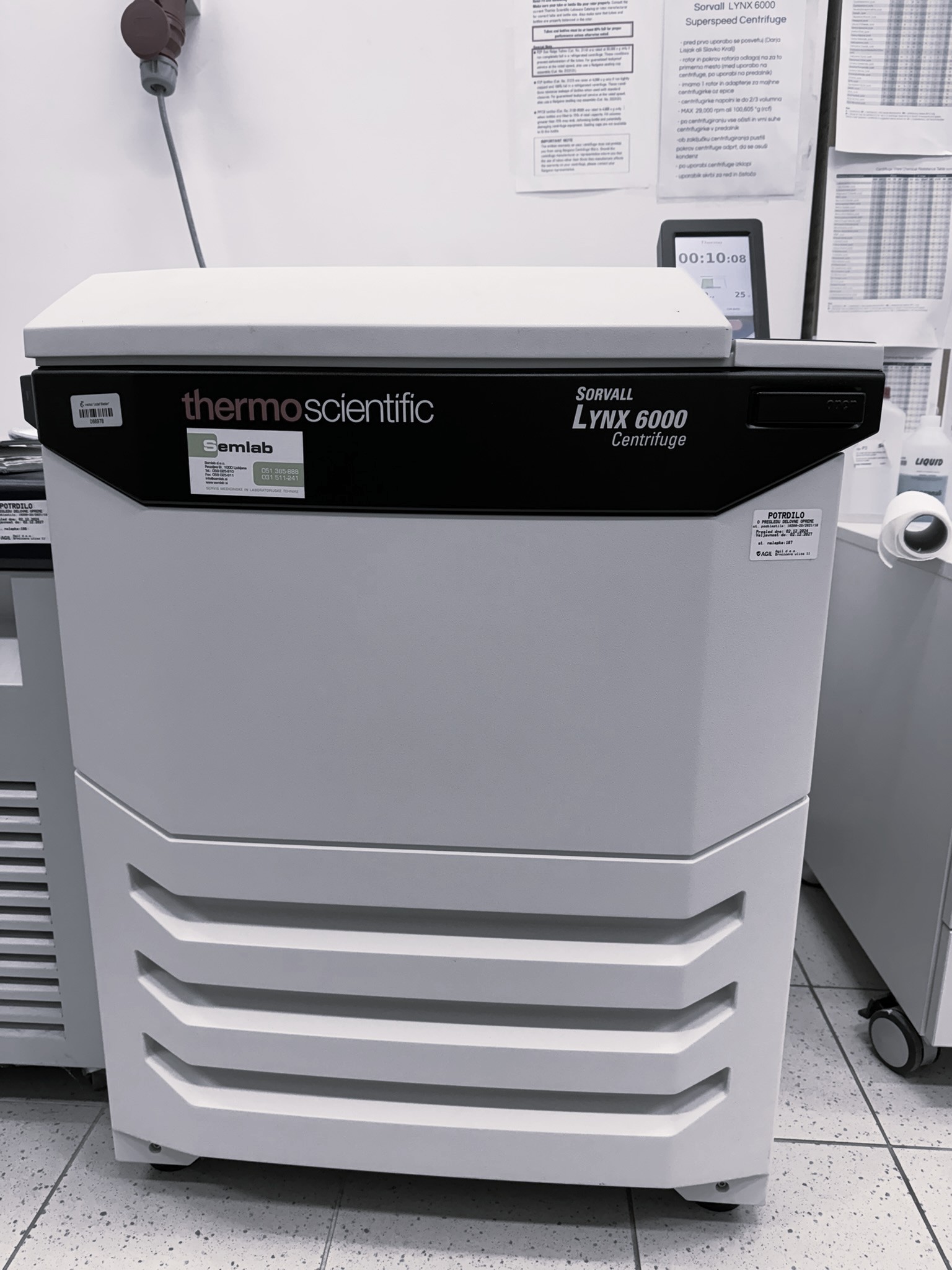
The Thermo Scientific Sorvall LYNX 6000 centrifuge is used for high-speed separation, washing, and purification of synthesized materials from liquid media. It supports efficient processing of suspensions, precipitates, nanoparticles, and other dispersed systems.
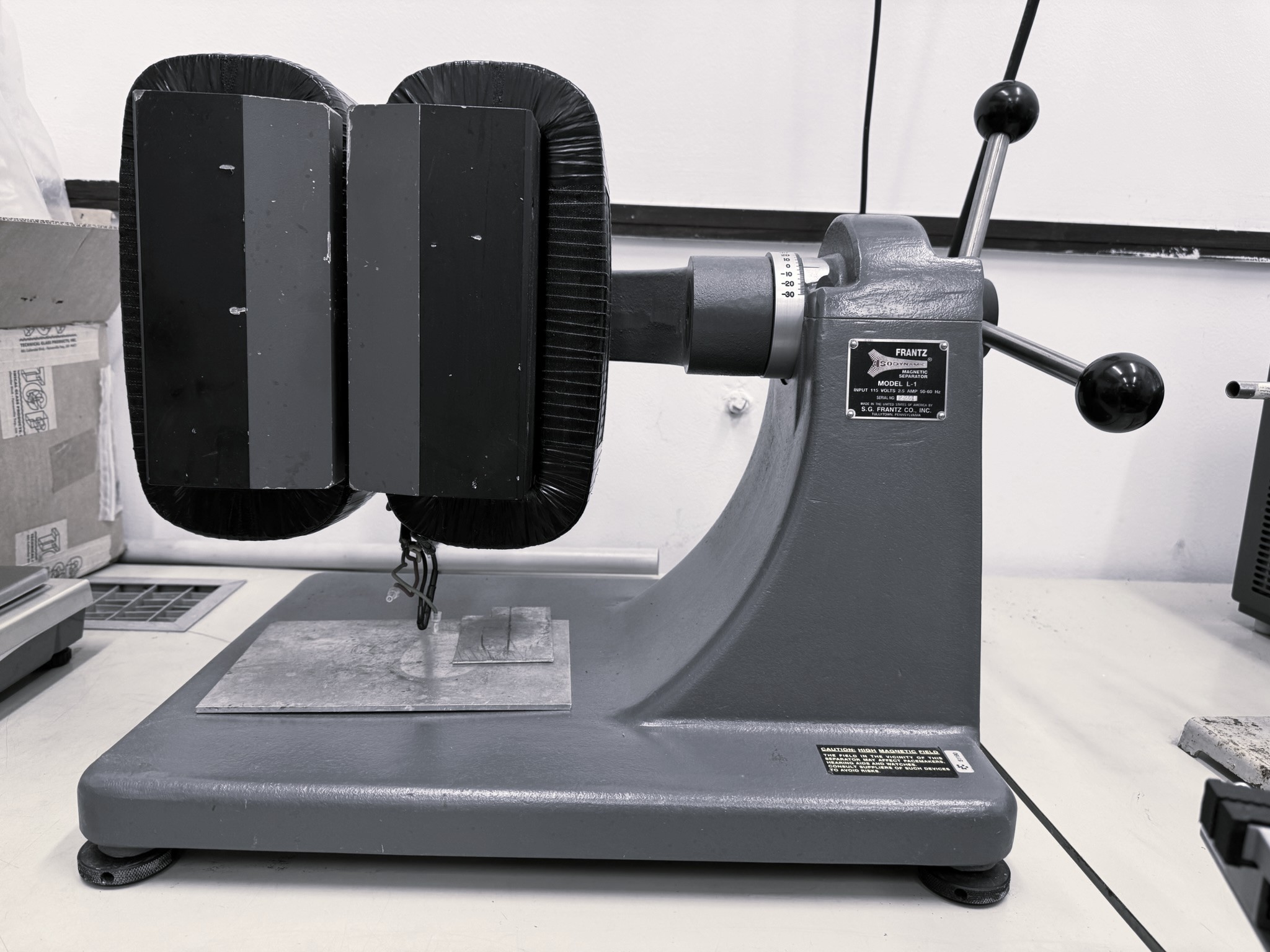
The laboratory operates a Frantz Isodynamic high-gradient magnetic separation (HGMS) system for the separation and classification of magnetic particles and powders based on their magnetic susceptibility. The system enables controlled separation of materials in strong magnetic-field gradients and is used for the processing, purification, and fractionation of magnetic and weakly magnetic materials.
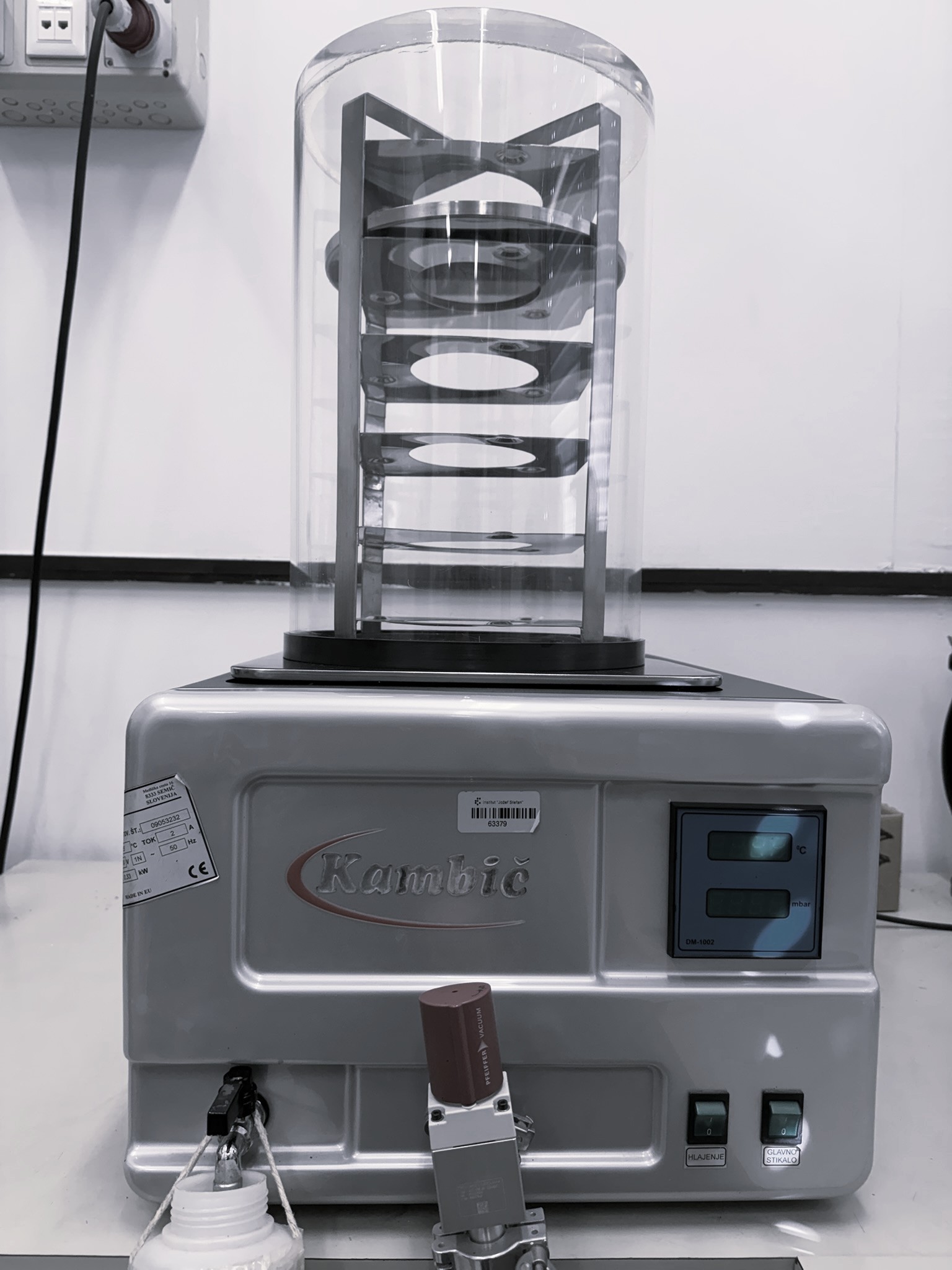
The Kambič freeze dryer is used for gentle drying of materials from frozen suspensions or solutions by sublimation under reduced pressure. This process helps preserve the structure, morphology, and dispersion quality of sensitive materials, including nanomaterials and porous systems.