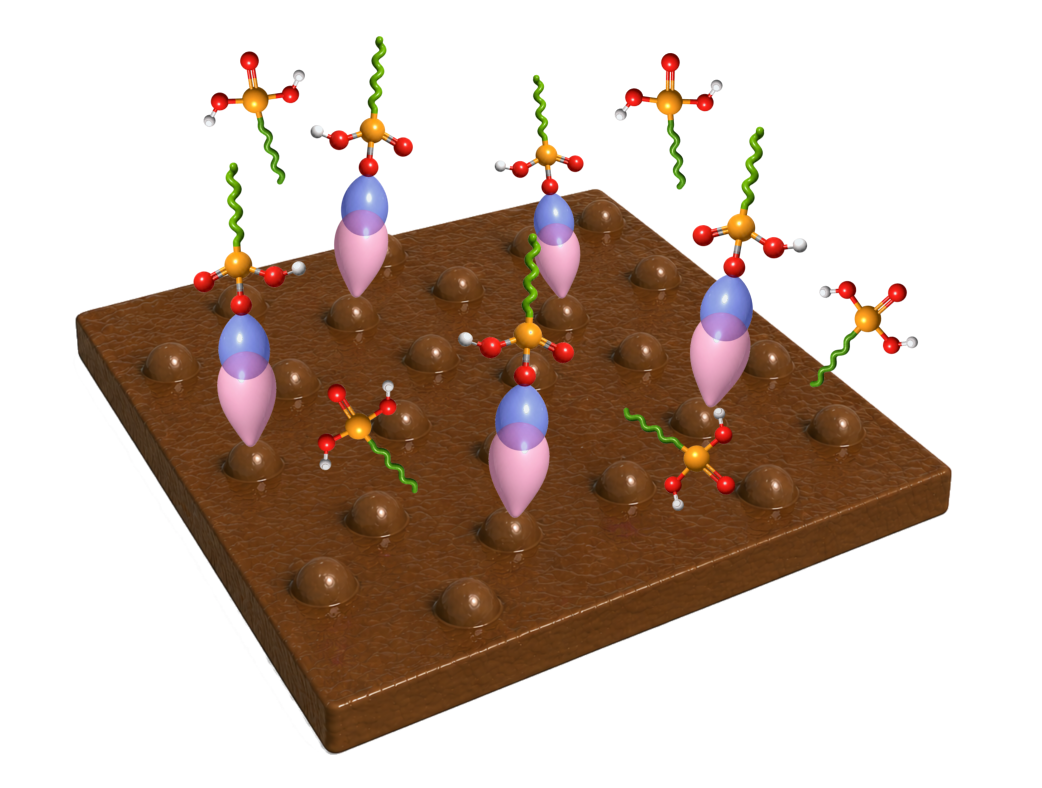
Hybrid materials couple inorganic crystals with organic molecules, both in nature and in engineered materials. The interaction of inorganic matter with organic is complex and governed by a subtle interplay of many parameters, including the chemical composition, crystal and electronic structure of the inorganic crystal and its surface, the chemical and electronic structure of the organic molecules, and external parameters such as the surrounding medium and temperature.
Hybridization of nanocrystals with organic molecules enables tuning of nanocrystal surface chemistry, which is needed for the development of functional nanomaterials. We study and develop nanohybrid materials based on quantum dots, surface plasmonic, magnetic, and fluorescent nanoparticles with potential applications in sensing, service robotics, medical diagnostics, water purification, microfluidics, and smart grids.
Our research focuses on understanding: (i) surface reconstruction of nanocrystals and its effect on the physical properties, such as optical absorption and emission, electronic structure, and magnetic exchange interaction, (ii) interactions between different types of inorganic nanocrystals, from purely ionic fluorides and oxides, to metals and partly covalent chalcogenides, with organic molecules, (iii) interactions of nanocrystals, organics, and nanohybrids with different media, (iv) physico-chemical properties of the nanohybrids and their application, and (v) environmental fate of the nanocrystals and nanohybrids after their disposal.
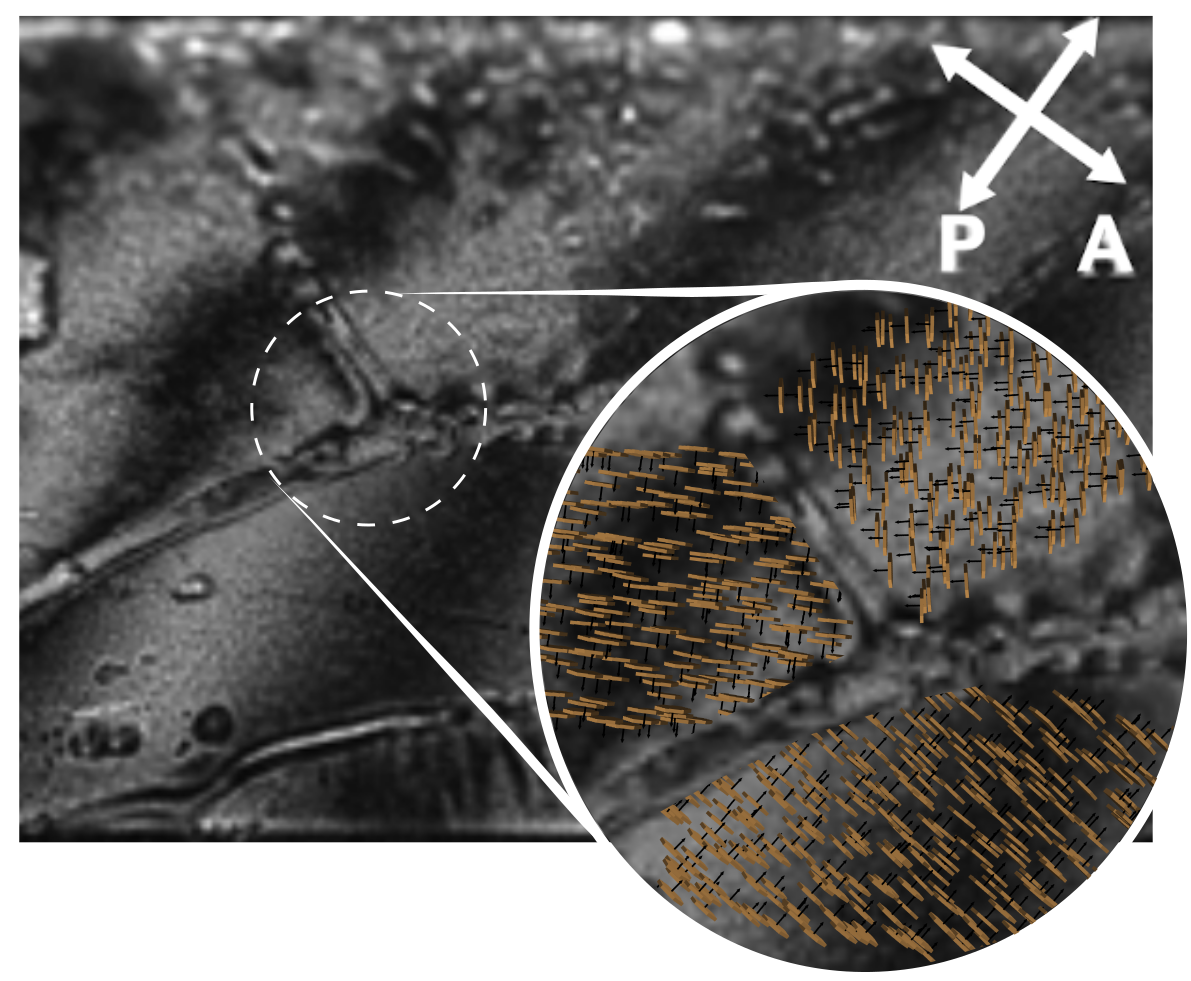
Liquid ferroics are a special type of nanostructured hybrid material. Ferromagnetic fluids, in particular, consist of ferrimagnetic nanoplatelets with tailored surface chemistry that enables their dispersion in solvents and liquid crystals. These nanoplatelets spontaneously assemble into magnetic domains without an external magnetic field and, when dispersed in a liquid-crystalline matrix, can exhibit spontaneous magnetization. These materials display magneto-optic, magneto-rheological, magneto-dielectric, and converse magneto-electric effects. Our research aims to couple these properties with electrical responsiveness.
Our ongoing projects: Marie Skłodowska-Curie Actions Doctoral Network MAESTRI, Magnetic Soft Matter for Robotics (No. 101119614), ARIS-Gravitacija: Semiconducting nanomaterials and devices (GC-0003), ARIS-Weave: Multifunctional hybrid materials with controllable ferroic properties (N2-0367), ARIS: Interactions of nanoparticles with complexants from biomass: environmental fate and reuse (J2-600038), and Novel materials based on lignin from biomass with enhanced luminescent activity (J2-50061).
People

Lisjak Darja
Coordinator
Tručl Jošt
Resarcher

Francesca Menescardi
Resarcher

Nikolić Juraj
Resarcher
Anželak Bernarda
Resarcher

Drobež Katja
Resarcher

Drempetić Lucija
Resarcher